Table of Contents
ToggleThere are places in Bali where time doesn’t rush you. Tenganan is one of them.
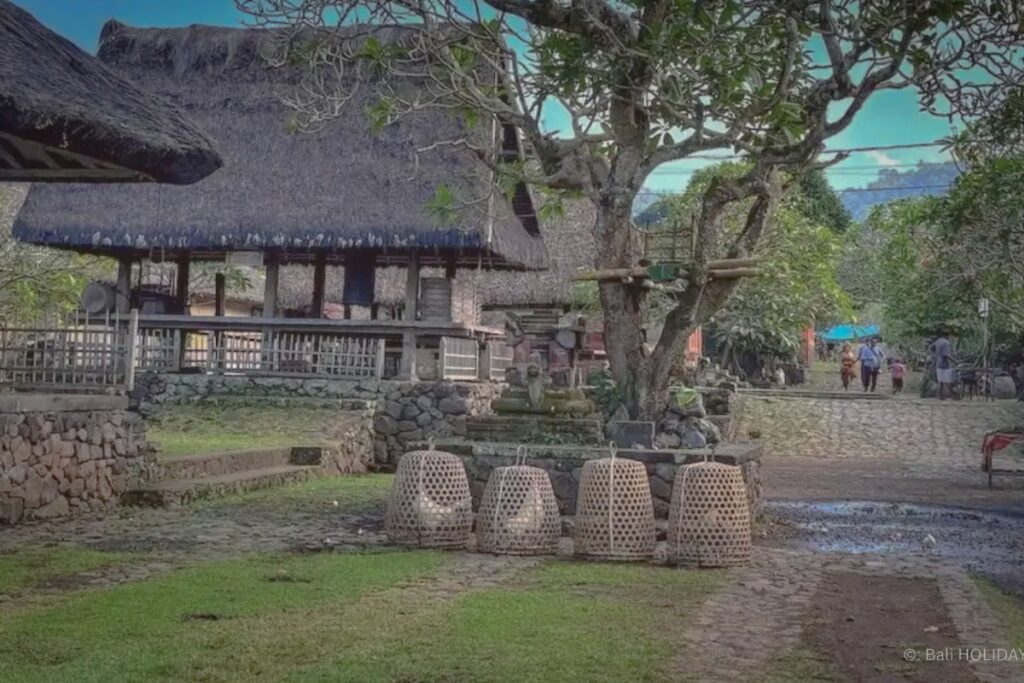
Tucked into the hills of Karangasem, just inland from Candidasa, this Bali Aga village has quietly stayed the same while the rest of the island kept moving.
No curated performances, no staged rituals. Just a community living by rules that existed long before tourism arrived.
You don’t really “visit” Tenganan. You walk in, slow down, and observe.
The stone path runs straight through the village, lined with traditional houses that look almost identical at first glance. Spend a little time and you’ll notice the details — carved doors, woven textiles resting in the shade, elders sitting quietly, watching the day unfold.
A Village That Still Lives by Its Own Rules
Life here follows awig-awig, customary laws that govern everything from land ownership to ceremonies and social order. These rules aren’t written for visitors — they’re for the people who live here, and they’ve kept the village intact for generations.
That’s what makes Tenganan feel different. It’s not preserved for display. It’s preserved because the community chooses it.
Geringsing, Woven Slowly
If there’s one thing Tenganan is known for, it’s geringsing — the rare double ikat textile woven only in a handful of places in the world.
The process is slow. Painfully slow by modern standards. Threads are tied, dyed, and retied before weaving even begins. Some pieces take years to complete.
You might see women working quietly on looms, their movements unhurried, practiced. These textiles aren’t decorations. They’re worn during ceremonies, rites of passage, and important moments in village life. Protection, balance, meaning — all woven into cloth.
Ritual Without Spectacle
If you visit around mid-year, you might hear about Perang Pandan — the ceremonial pandan leaf battles held during Usaba Sambah. It’s often described dramatically online, but in person it feels grounded, communal, almost matter-of-fact.
This isn’t entertainment. It’s tradition continuing as it always has.
The same goes for music, dance, and daily offerings. Nothing is rushed for cameras. If you’re there at the right time, you witness it. If not, the village continues anyway.
How to Experience Tenganan (Without Disrupting It)
Come in the morning, when the air is cooler and the village is quiet.
Dress modestly.
Ask before taking photos.
Don’t treat it like a checklist stop.
There are small stalls near the entrance selling crafts and textiles — buying directly from villagers is one of the few ways visitors can meaningfully support the community.
Pair Tenganan with East Bali at large: Tirta Gangga, Candidasa’s coastline, or a slow lunch overlooking rice fields. This part of the island rewards patience.
Why Tenganan Still Matters in 2026
In a Bali shaped increasingly by trends, algorithms, and fast itineraries, Tenganan offers something rarer: continuity.
Not frozen in time — just steady.It reminds you that culture doesn’t need reinvention to stay relevant. Sometimes, staying rooted is the most radical thing of all.