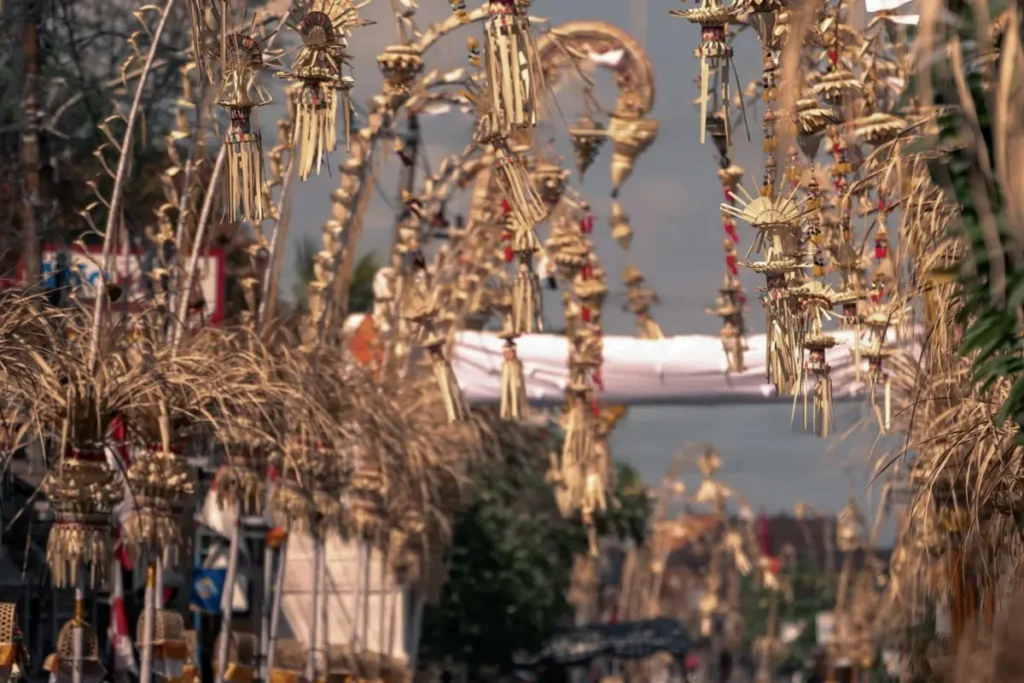
Galungan in Bali is a sacred Hindu celebration. During this special time, you’ll see tall decorated bamboo poles called penjor placed in front of homes and along the streets as a symbol of gratitude for the blessings of the universe.
This article will help you understand the meaning behind Galungan, the traditions that take place during the celebration, and the important dates to know. It’s a simple guide for travelers who want to experience Galungan Bali with more awareness and respect for the local culture.
Table of Contents
ToggleThe Meaning Behind Galungan and Kuningan
Hari Raya Galungan and Kuningan Bali are part of one sacred celebration observed by Balinese Hindus every 210 days based on the Pawukon calendar. Galungan Day represents the victory of dharma (good and righteousness) over adharma (evil), while also reminding people to practice self-control and overcome negative tendencies known as Sad Ripu.
During this period, Balinese families welcome the presence of deities and ancestral spirits with prayers and offerings. One of the most recognizable symbols is the penjor Bali, a tall curved bamboo pole decorated with young coconut leaves and agricultural products. These are placed in front of homes as a sign of gratitude for the blessings and abundance given by Sang Hyang Widhi Wasa.
Galungan and Kuningan Dates for 2026 and 2027
If you’re wondering what is Galungan Day, it is part of a sacred Balinese Hindu celebration that follows the 210-day Pawukon calendar. Because of this shorter calendar cycle, Hari Raya Galungan Bali can take place twice within one Gregorian year.
In Galungan Bali 2026, the first celebration falls on Wednesday, March 18, followed by Kuningan on Saturday, March 28. The second cycle takes place later in the year, with Galungan on Wednesday, October 14, 2026, and Kuningan on Saturday, October 24, 2026.
In 2027, the dates shift again according to the same 210-day cycle. Galungan will be celebrated on Wednesday, May 12, with Kuningan on Saturday, May 22. The next celebration will begin with Galungan on Wednesday, December 8, followed by Kuningan on Saturday, December 18. Knowing these dates can help travelers plan ahead and experience tradisi Galungan Bali while visiting the island.
How Galungan Differs From Nyepi and Odalan
Although Galungan, Nyepi, and Odalan are all important parts of the Balinese Hindu festival calendar, each celebration has a different meaning and atmosphere. The Galungan festival Bali takes place every 210 days based on the Pawukon calendar and celebrates the victory of dharma (good) over adharma (evil).
During the Galungan Bali festival, the island feels more festive, with penjor decorating the streets and families visiting temples and relatives.
Nyepi is very different. This Hindu festival Bali marks the Saka New Year and is focused on silence, self-reflection, and purification. For 24 hours, activities across Bali come to a stop, with no travel, entertainment, or unnecessary lighting.
Odalan, meanwhile, is a temple anniversary rather than an island-wide celebration. It is held at individual temples, usually every 210 days or once a Saka year, when local communities gather to pray, make offerings, and honor the deity associated with the temple.
The Galungan and Kuningan Rites: A Day-by-Day Guide
The Galungan and Kuningan celebrations take place through a series of meaningful rituals rather than on just one day. Each stage helps Balinese Hindus prepare spiritually and physically for the main Galungan celebration, beginning with purification and preparing offerings, followed by prayers, family gatherings, and finally Kuningan, when ancestral spirits are believed to return to the divine realm.
Penyekeban, Penyajaan, and Penampahan: The Preparation Days
The three days before Galungan are an important part of this Bali cultural festival. It starts with Penyekeban on Sunday, when families ripen bananas and begin preparing offerings. Symbolically, this represents growing self-awareness and learning to control worldly desires.
Monday is known as Penyajaan, when families prepare traditional Balinese rice-flour cakes. This tradition symbolizes having a steady and sincere heart as Galungan approaches.
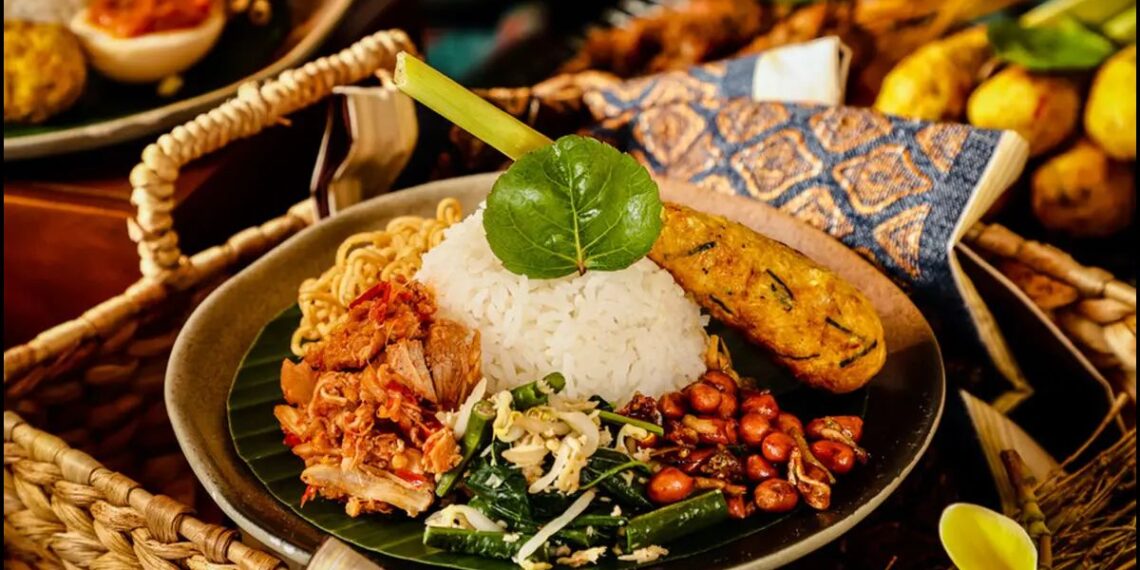
Then comes Penampahan on Tuesday, the day before Galungan. Families prepare ceremonial dishes such as lawar and satay, traditionally using pork or chicken. This is also when the famous Galungan Bali penjor begins to line the streets.
These tall, decorated bamboo poles are placed in front of homes as symbols of victory, gratitude, and the blessings of nature.
Galungan Day: Prayers, Penjor, and Family Gatherings
For anyone wondering what is Galungan and Kuningan, Galungan Day is the main celebration, taking place on Rabu Kliwon Dungulan. It represents the victory of dharma (good) over adharma (evil).
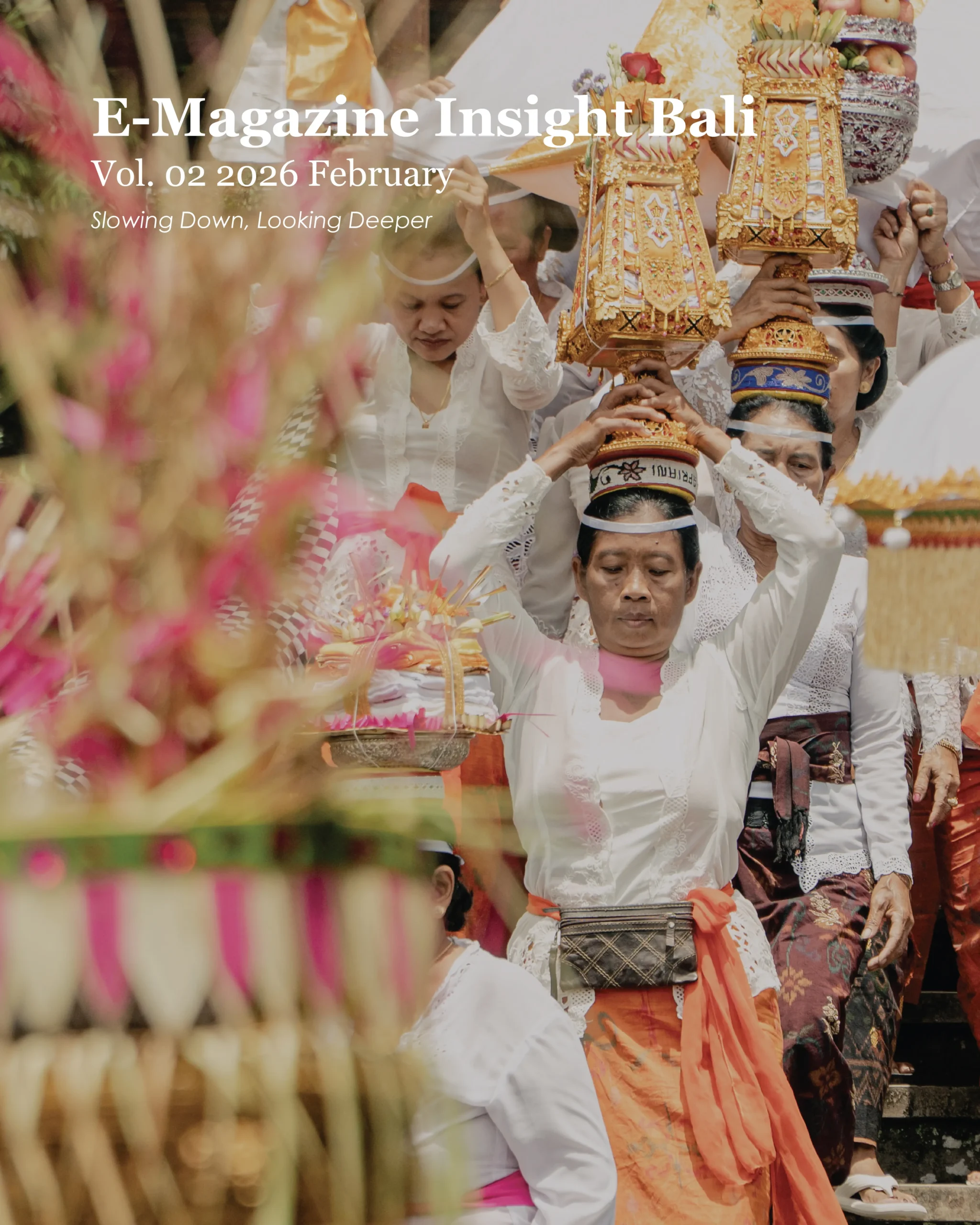
Early in the morning, families dress in traditional Balinese clothing and begin praying at their merajan, or family shrine, before continuing to village temples. With decorated penjor lining the roads, the atmosphere becomes especially festive. The day is also a time for gathering with extended family, asking for forgiveness, and giving thanks for life’s blessings.
Manis Galungan: A Day for Family Visits
The day after Galungan is called Manis Galungan. The atmosphere becomes more relaxed as families finish their prayers and spend time visiting relatives, enjoying outings, or simply gathering together.
It is also a chance to strengthen family and community relationships, known as Pawongan, while enjoying the traditional dishes prepared during the celebration.
Kuningan: Farewell to the Ancestors
Ten days after Galungan, the celebration ends with Kuningan Day, held on Saniscara Kliwon Kuningan. This day is believed to mark the return of deities and ancestral spirits to the divine realm after their time on earth during the Galungan and Kuningan period.
Families prepare special offerings that include yellow rice, or nasi kuning, along with symbolic decorations such as tamiang and endongan. Because the deities and ancestors are traditionally believed to return before midday, Kuningan prayers are usually completed before 12:00 PM WITA.
Penjor, Banten and the Symbols of Galungan
To understand the Galungan Bali meaning, it helps to look at the symbols seen throughout the celebration. Each one carries a spiritual message and reflects gratitude to Sang Hyang Widhi Wasa.
The penjor, a curved bamboo pole decorated with young coconut leaves, crops, fabric, and a small shrine called sanggah cucuk, is one of the most recognizable parts of this Balinese religious ceremony. It is commonly linked to Mount Agung and the sacred dragons Anantaboga and Basuki, which symbolize life, fertility, and balance.
Another important element is banten, or traditional offerings made with leaves, flowers, fruit, and food. These offerings are a way for Balinese Hindus to express gratitude and connect spiritually through prayer.
Other symbols, such as the temporary Sanggah Tutuan shrine and black-and-white poleng cloth, also represent balance between opposing forces, known as Rwa Bhineda. If you are wondering when is Galungan in Bali, these symbols become especially visible throughout the days leading up to and during the celebration, making the island’s spiritual traditions much easier to notice and appreciate.
Where to Experience Galungan Across Bali
If you’re wondering what is Galungan in Bali and where to experience it, the celebration can be seen across the island. Still, traditional villages and major temple areas often offer the most memorable atmosphere, with decorated penjor, family prayers, temple visits, and locals wearing traditional Balinese clothing.
Ubud and the Surrounding Villages
Ubud and nearby villages are among the most beautiful places to experience Galungan. Main roads and smaller village streets are decorated with tall penjor that curve over the road, creating a striking display of bamboo and young coconut leaves.
You may also see local families dressed in traditional white and yellow clothing carrying offerings to temples. For travelers looking for cultural things to do in Ubud, visiting during Galungan can offer a meaningful glimpse into everyday Balinese Hindu traditions. It can also be one of the best times to visit if you want to experience Ubud’s spiritual side.
Penglipuran Village and the Bangli Highlands
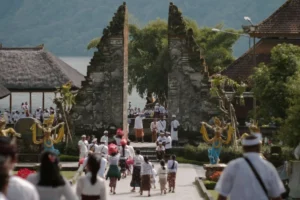
Penglipuran Village offers a different Galungan atmosphere, with rows of traditional houses and neatly arranged penjor lining its pedestrian-friendly main street. Surrounded by the cooler landscape of the Bangli highlands, the village feels calm, traditional, and especially photogenic during the celebration.
The strong community atmosphere also makes Penglipuran a good place to see how Galungan traditions are still closely connected to family and village life.
Temples Worth Visiting During the Festival Period
Major temples can also offer a deeper look at Galungan traditions. Pura Agung Besakih on the slopes of Mount Agung becomes an important place of prayer, while temples such as Tanah Lot and Pura Penataran Agung Lempuyang combine spiritual ceremonies with some of Bali’s most dramatic landscapes.
If you want to plan your trip around the festival, checking the latest Galungan and Kuningan dates is important because the celebration follows Bali’s 210-day Pawukon calendar. Travelers visiting this year can also plan around the Galungan and Kuningan 2026 dates in Bali to experience the island during one of its most meaningful cultural periods.
How Galungan Affects Travel, Transport, and Daily Life
During Galungan, daily life in Bali can move at a slower pace as many Balinese Hindus focus on prayers, ceremonies, and family gatherings. Some government offices, banks, schools, and locally owned shops may close around Penampahan, Galungan Day, and Manis Galungan.
Ride-hailing and transport services usually still operate, but there may be fewer drivers available, while roads near temples can become busier because of ceremonies and processions.
Tourist areas such as Seminyak, Canggu, and Nusa Dua generally continue operating as usual, especially hotels, restaurants, and major attractions. Still, it is a good idea to allow extra travel time and keep your schedule flexible.
Should You Plan a Trip to Bali Around Galungan?
Yes, especially if you want to experience Bali culture in a more meaningful way. During Galungan, streets are decorated with beautiful penjor, families wear traditional clothing, and temples become more active with prayers and offerings.
The main thing is to travel with a little flexibility. Some local businesses may have shorter opening hours, traffic can be heavier near temples, and certain areas may feel quieter than usual. As long as you dress respectfully near places of worship and avoid disturbing ceremonies, visiting during Galungan can be one of the most memorable ways to experience Bali’s cultural and spiritual traditions.
Etiquette for Visitors During Galungan and Kuningan
If you are visiting Bali during Galungan and Kuningan, it is important to respect the religious atmosphere and local traditions. When entering a temple or passing through an area where ceremonies are taking place, wear modest clothing. A sarong (kamen) and sash (senteng) are usually recommended for temple visits.
Try not to walk directly in front of people who are praying, and avoid stepping over offerings such as canang sari placed on the ground. If you want to take photos of local people, ceremonies, or temple areas, it is polite to ask permission first. Based on local beliefs about ritual purity, women who are menstruating are also traditionally asked not to enter sacred temple areas.
Frequently Asked Questions About Galungan in Bali
- Are tourists allowed to watch Galungan prayers at the temple?
Yes. Visitors can usually observe from the outer or public area of the temple, known as Nista Mandala. Make sure to wear appropriate clothing, stay quiet, and avoid interrupting the ceremony. - Are flights and transportation in Bali suspended like during Nyepi?
No. Galungan and Kuningan do not stop transportation across the island. Flights, taxis, ride-hailing services, and public transport generally continue to operate, although some roads may be busier because of ceremonies and processions. - How long do Galungan penjor stay in front of houses?
Penjor are usually kept in place for around 35 days, or one Balinese selapan, beginning on Galungan Day and continuing until Pegat Wakan, which marks the end of the Galungan celebration period. - Do shops and tourist attractions stay open during Galungan?
Most hotels, major attractions, and restaurants in tourist areas remain open. However, some local shops and warungs owned by Balinese Hindus may close for one to three days around the main celebration.
Carrying the Spirit of Galungan Into the Rest of Your Bali Trip
Experiencing Galungan Bali can give you a deeper appreciation of the island’s traditions, family values, and spiritual way of life. Even after the celebrations end, you can carry that sense of respect and curiosity into the rest of your journey by exploring temples, villages, local customs, and meaningful cultural experiences.
For more travel inspiration and practical tips, let Insight Bali be your guide to discovering the best of Bali with a little more understanding along the way.