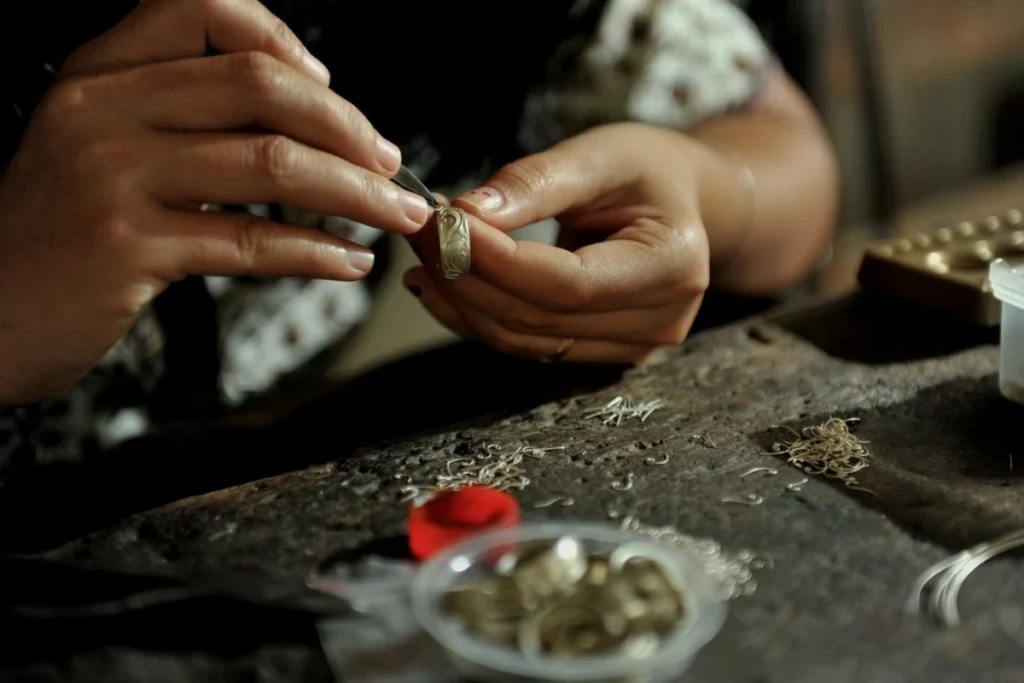
Celuk Silver Village is Bali’s legendary hub for silver craftsmanship, known for jewelry with detailed, intricate carvings. Come see local artisans at work and pick up your own unique piece of Balinese-style jewelry straight from where it’s made.
In this guide, we’ll walk you through everything worth knowing about Celuk Silver Village, from its history to everything else it has to offer. Consider this your complete guide to Celuk Silver Village, the heart of Bali’s silver craftsmanship.
Table of Contents
ToggleWhat Is Celuk Silver Village and Why It Matters in Bali
Celuk Village Bali, is where gold and silver craftsmanship come together, tucked in the Sukawati District of Gianyar Regency. Since around 1915, precious metalworking skills have been passed down through the generations by traditional artisan clans known as Pande, and today that skill runs through nearly every household in the village.
Desa Celuk works as a community-driven creative industry hub. Walk along the main road, and you’ll find rows of galleries and workshops showing off all kinds of metalwork, from pure celuk silver jewelry and decorative sculptures to household items and traditional Balinese ceremonial pieces.
Here’s why Celuk Village matters to Bali:
- Traditional Art Heritage: Artisans use manual carving techniques that blend distinctive Balinese motifs with modern designs, keeping authentic artistic values alive.
- Economic and Export Pillar: It drives the local economy by supplying silver jewelry to international markets.
- Educational Tourism Destination: Visitors can watch the whole production process up close, from raw materials to finished pieces, and even join a silver-making class.
The History Behind Celuk’s Silver and Gold Craftsmanship
The history of gold and silver craftsmanship in Celuk Village goes back to a shift in how locals made a living, moving away from farming to become Bali’s silver village for precious metal artistry.
It all started in the early 1900s, when a group of residents from the Pande clan (a caste of metal artisans) began serving the needs of Balinese royal families. They crafted jewelry, crowns, and religious ceremonial objects from gold and silver, laying the groundwork for what would become Celuk Village’s jewelry industry today.
Between 1915 and the 1930s, these metalworking skills started being taught to villagers outside the Pande clan too. As a result, most of the population, who used to be farmers, shifted into the craft since it offered better economic value.
Then in the 1970s, a wave of international tourists arriving in Bali sent demand for gold and silver soaring. Celuk artisans began blending traditional Balinese motifs (like jering, bun-bunan, and janggeran) with contemporary Western styles to meet the needs of the export market.
Today, Celuk Village’s silver has become synonymous with Bali’s silver industry as a whole. These skills keep getting passed down through generations, keeping manual techniques such as filigree (fine twisted wirework) and granulation (tiny silver spheres) alive to this day.
Traditional Balinese Silver Motifs Worth Knowing
Artisans in Celuk Art Village pull their carving motifs from nature, mythology, and Balinese culture, and each one tells its own story:
- Bun-bunan (Plant Tendrils): vine-like carvings symbolizing growth, life, and continuity.
- Jeringan (Seeds): a repeating pattern of seed rows, standing for fertility and prosperity.
- Patra (Foliage & Flowers): classic Balinese leaf and floral motifs that give balinese silver jewelry its elegant, timeless look.
- Peta Bintang (Geometric Style): tiny silver dots (granulation) arranged into spiritual geometric patterns.
- Balinese Mythology: carvings of sacred figures or mythical creatures like Barong, Garuda, or Kala, used as protective symbols.
What to Experience in Celuk Village
Planning a trip near Ubud? Here’s what you shouldn’t skip when you visit:
- Take a Silver Making Class: learn to design, cut, solder, and carve your own silver piece with guidance from local artisans.
- Join a Workshop Tour: watch the manual techniques of filigree (fine silver wire weaving) and granulation up close, both take serious precision to pull off.
- Shop Directly from Artisans: pick up sterling silver (925) jewelry at factory or direct from maker prices, way more affordable than retail store rates.
- Check Out Antique Collections: bigger galleries in the village hold large-scale silver sculptures, furnishings, and ceremonial pieces worth seeing.
Celuk Village Compared to Ubud and Sukawati Art Markets
| Feauture | Celuk Village | Ubud Art Market | Sukawati Art Market |
| Primary Focus | Fine silver and gold craftsmanship | Fine art, wood carvings, & boho fashion | Bulk souvenirs, sarongs, & handicrafts |
| Product Character | High-quality sterling silver (925) & custom metalwork | Curated fine art, paintings, & lifestyle goods | Mass-produced souvenirs, garments, & local crafts |
| Pricing | Direct artisan pricing (fair value for raw metal & labor) | Mid to high-end (tourist & boutique prices) | Budget-friendly (requires active bargaining) |
| Key Experience | Hands-on silver making classes & factory tours | Art galleries, museums, & boutique shopping | Bargain hunting for souvenirs & local textiles |
How to Get to Celuk Village
You’ll find Celuk Village on Jalan Raya Celuk in the Sukawati District, Gianyar Regency, Bali, known for its Celuk Bali silver craftsmanship and sitting right along the main route connecting Denpasar City to Ubud.
- From Ngurah Rai Airport (DPS): about 26 km north, roughly a 45–60 minute drive.
- From Ubud Center: about 12 km south, roughly a 20–30 minute drive.
- From Seminyak / Kuta: about 20–25 km away, roughly a 45–60 minute drive.
Getting to Celuk Village
- Motorbike / Car Rental (Self-Drive): the most flexible way to explore the galleries along Jalan Raya Celuk at your own pace. Just follow the Ngurah Rai Bypass to Jalan Raya Batubulan, then continue on to Jalan Raya Celuk.
- Motorbike Taxi / Ride Hailing Apps (Gojek / Grab): an easy, practical choice for one-way trips from popular spots like Denpasar, Sanur, or Kuta.
- Private Driver (Car Rental with Driver): ideal if you want to pair your visit with nearby stops like Sukawati Art Market, Batubulan Village, or Ubud, especially if silver jewelry making in Bali is just one stop on a bigger day trip.
- Trans Metro Dewata Bus (Public Transport): take a route corridor through the Batubulan/Sukawati area, hop off near Batubulan or Sukawati, then finish the last stretch by local taxi or motorbike taxi.
Practical Information Before You Visit
Curious about Celuk Village opening hours? Most galleries and workshops run daily from 08:00 to 18:00 WITA, so you’ve got plenty of the day to explore.
- Entrance Fee: there’s no celuk village entrance fee to walk around and check out the galleries along the main road. You’ll only pay if you join a silver making class, which runs around IDR 350,000 to IDR 500,000 per person.
- Facilities: larger galleries have plenty of parking, and while the big ones take credit and debit cards, it’s smart to carry cash (Rupiah) for the smaller artisan workshops.
- Best Time to Visit: mornings, around 09:00 to 11:00 WITA, are ideal since you’ll dodge the heat and catch artisans working in a calmer, quieter setting.
Tips for Buying Authentic Silver in This Bali Silver Village
- Check for the Silver Hallmark (925): genuine, high-quality silver jewelry always carries a “925” or “S925” stamp, meaning it’s 92.5% pure silver.
- Test the Weight and Temperature: real silver has some heft to it (it won’t feel as light as zinc or aluminum) and warms up quickly to match your body temperature when you hold it.
- Look Closely at the Craftsmanship: pieces from an authentic celuk silver workshop show neat, symmetrical filigree or granulation, with no rough or sloppy solder joints.
- Bargaining is Totally Fine: at small shops or straight from the artisan’s workshop, you can politely haggle the price down by about 10% to 20% from what’s first offered.
- Ask for an Official Receipt or Certificate: For pricier jewelry or silver pieces set with gemstones, always request a receipt with warranty details or product specs included.
Nearby Villages and Attractions to Pair With Celuk
- Batubulan Village
Just 5 minutes south of Celuk, this village is known for Balinese stone carving and performing arts. Every morning, you can catch traditional Barong and Keris dance performances here, rooted in Balinese rituals that have been passed down for generations. - Sukawati Art Market
About 10 minutes north of Celuk, this legendary market is where you’ll find authentic Balinese souvenirs like batik clothing, paintings, wood carvings, and trinkets, all at prices that won’t break the bank. - Mas Village
Roughly 15 to 20 minutes away on the road to Ubud, Mas Village is known for exquisite Balinese wood carving. Watch artisans turn teak and ebony into detailed sculptures and decorative pieces, a solid stop if you’re stacking up things to do in Ubud’s surrounding area. - Tegenungan Waterfall
About 15 minutes from Celuk, this waterfall offers lush green cliff views and fresh air, plus cafes and photo spots scattered along the river. - Singapadu
Right next door to Celuk, this area is known for family-friendly attractions and wildlife parks like Bali Zoo and Bali Bird Park.
Supporting Celuk’s Artisan Community Responsibly
- Buy Directly from Local Artisans: try to shop at workshops or small galleries owned by locals, that way the money goes straight back into the artisan community.
- Bargain Wisely: negotiate fairly and stay polite. Remember, making Celuk silver jewelry takes time, careful attention to detail, and manual skills passed down through generations.
- Join a Silver Making Class: taking a class gives local instructors a direct economic boost while helping keep this craft tradition alive.
- Respect Etiquette and Privacy: always ask permission before snapping photos or videos of artisans at work in their workshops.
Celuk Village Frequently Asked Questions
- How long should I plan for a visit to Celuk?
About 1 to 2 hours if you’re just shopping and browsing the galleries, or 3 to 4 hours if you’re joining a silver-making class. - Is the jewelry in Celuk genuine silver?
Yes, most products meet the 925 (sterling silver) standard. Just double-check for that “925” stamp before you buy. - Can I order custom-designed jewelry?
Yes. Plenty of workshops in Celuk take custom orders based on a sketch or photo you bring in. - Do galleries in Celuk accept cashless payments?
The larger galleries take credit/debit cards and QRIS, but it’s good to carry Indonesian Rupiah cash for the smaller artisan shops.
Why Celuk Remains One of Bali’s Most Meaningful Craft Destinations to Explore
Celuk Silver Village is more than just a shopping stop, it’s a living piece of Bali’s heritage where centuries of craftsmanship are still being carved, twisted, and shaped by hand today. Whether you’re picking up a custom silver piece, joining a hands on class, or simply wandering the galleries along Jalan Raya Celuk, it’s an experience worth building into your Bali itinerary. For more guides like this to help you explore the best of the island, check out Insight Bali.