Across Bali, small woven baskets filled with colorful flowers and incense are a familiar sight at temples, homes, and shop entrances. Known as canang sari, these traditional Balinese Hindu offerings represent gratitude, devotion, and a spiritual connection with God.
Beyond their beautiful appearance, canang sari offerings carry meaningful symbolism rooted in Balinese Hindu beliefs and daily traditions. Understanding their purpose, components, and placement offers a deeper insight into Bali’s rich cultural and spiritual heritage.
Table of Contents
ToggleWhat Is Canang Sari?
According to the Buleleng Culture and Tourism Office, canang sari is a daily religious offering used by Balinese Hindus during prayers. As an important part of Balinese culture, these offerings represent gratitude, sincerity, and devotion to Ida Sang Hyang Widhi Wasa (God Almighty) and His manifestations.
These Balinese offerings can be found in temples, family shrines, house entrances, business premises, and public spaces throughout Bali. The tradition of canang sari in Bali reflects the importance of maintaining a spiritual connection through daily offerings.
The word canang comes from two Kawi (Old Javanese) words: can, meaning beautiful, and nang, meaning purpose or intention. Meanwhile, sari means essence or core. Together, the term canang sari represents an offering made with sincerity and devotion.
It also serves as a way for Balinese Hindus to seek blessings and the power of knowledge (widya) from Sang Hyang Widhi Wasa. This meaning highlights the spiritual values behind the canang Bali tradition.
Why Balinese Hindus Make Offerings Every Day
For Balinese Hindus, daily offerings in Bali are an important part of religious practice, representing gratitude, sincerity, and devotion to Ida Sang Hyang Widhi Wasa (the Supreme God). One of the most common Bali religious offerings is Canang Sari, which is usually presented in the morning at family shrines, temples, homes, and business premises. This tradition has several important meanings in the spiritual lives of Balinese Hindus.
- Expressing Gratitude and Devotion
Making offerings is a way for Balinese Hindus to express gratitude for life, health, protection, and the blessings they receive. Through the Canang Sari Bali offering, they show their devotion and sincerity to Ida Sang Hyang Widhi Wasa as part of their daily religious practice. - Maintaining Harmony Through Tri Hita Karana
The tradition of making offerings is closely related to Tri Hita Karana, a Balinese philosophy that emphasizes harmony in three important relationships:
– Parahyangan: Harmony between humans and God.
– Pawongan: Harmony among people.
– Palemahan: Harmony between humans and the natural environment.
These three principles guide many aspects of Balinese Hindu life, including daily religious practices and the importance of maintaining balance in everyday activities. - Praying for Protection and Well-Being
In addition to expressing gratitude, Balinese Hindus also present offerings as a form of prayer for safety, protection, prosperity, and well-being. The purpose of each offering may differ depending on its type and the religious ceremony or ritual in which it is used. - Bringing Spirituality into Daily Life
Preparing and presenting daily offerings helps Balinese Hindus maintain their spiritual connection with God. This practice also encourages sincerity, patience, and appreciation for everyday life.
Through this tradition, spirituality becomes part of daily routines rather than something practiced only during major religious ceremonies. The simple act of preparing and presenting Canang Sari reflects the importance of faith and gratitude in Balinese Hindu culture.
What Is Inside a Canang Sari?
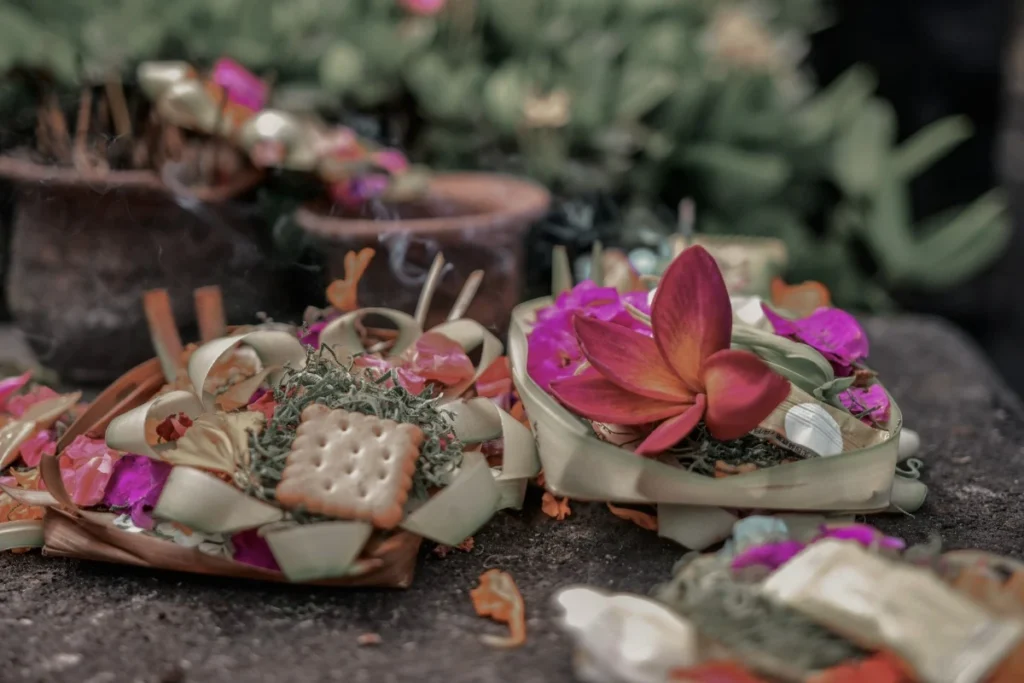
A Canang Sari is made from natural materials such as young coconut leaves (janur), flowers, pandan leaves, and rice. These materials are arranged to create one of the most common Bali offerings used in daily Hindu prayers.
Each component has a symbolic meaning related to sincerity, gratitude, and devotion to God. Understanding these elements also helps explain the cultural and spiritual meaning behind canang making in Bali.
Here are the main components commonly found in Balinese offerings, Canang Sari:
- Ceper (Coconut-Leaf Base): A square-shaped container woven from young coconut leaves (janur). It serves as the base that holds the other components of the offering.
- Porosan: An important part of Canang Sari, made from betel leaf, areca nut, and lime. These three materials represent the Tri Murti, consisting of Brahma, Vishnu, and Shiva. They also symbolize the importance of maintaining harmony in thoughts, words, and actions.
- Sampian Urasari: A circular decoration made from folded young coconut leaves. It is used to arrange flowers and carries a symbolic meaning related to sacred power.
- Colorful Flowers: Flowers symbolize different manifestations of God associated with the four cardinal directions. In traditional arrangements, white flowers are placed in the east, red in the south, yellow in the west, and blue or green in the north.
- Kembang Rampe: Finely sliced pandan leaves that add a natural fragrance to the offering. They are usually placed alongside the flowers.
- Rice and Additional Items: Rice grains symbolize the source of life. Depending on local traditions, some offerings may also include banana pieces, sugarcane, or traditional snacks.
- Incense is also commonly lit when Canang Sari is presented during prayer.
The materials and arrangement of Canang Sari may differ depending on family traditions, local customs, and the type of religious ritual. However, its main purpose remains the same: to express sincerity, gratitude, and devotion to God through daily offerings.
Where You Will See Canang Sari and What Placement Means
Canang Sari represent gratitude, prayers for safety, and efforts to maintain harmony in life. The meaning of each offering may vary depending on where it is placed and the purpose of the ritual.
Here are some common places where Balinese Hindu offerings, including Canang Sari, can be found and what they represent:
- Temples (Pura) and Family Shrines (Sanggah or Merajan):
Canang Sari are placed in sacred areas as an expression of devotion and respect toward Ida Sang Hyang Widhi Wasa (the Supreme God) and His manifestations. They may also be presented to honor ancestors as part of family worship. - Home Entrances:
Offerings placed near gates or entrances are accompanied by prayers for the safety, protection, and harmony of the people living in the house. - Places of Business and Shops:
Canang Sari are commonly placed near entrances, on counters, or in designated prayer areas. They represent gratitude and prayers for business success and the prosperity of the owners. - Home Courtyards and Open Spaces:
Offerings placed in these areas are part of the practice of maintaining harmony with the surrounding environment. However, their specific purpose and meaning may differ depending on the religious ritual being performed. - Vehicles:
Some Balinese Hindus also place Canang Sari on their cars or motorcycles as a prayer for safety and protection while travelling.
The placement of Canang Sari shows how spiritual beliefs are part of everyday life and reflect the importance of Bali traditions. However, it is important to understand that not all offerings found on the ground are Canang Sari. Some may be segehan, which are different types of offerings associated with rituals to maintain balance and harmony in nature.
For visitors, respecting these Balinese Hindu offerings is an important part of understanding local customs. Avoid stepping on, moving, or touching offerings that are part of an ongoing ritual. If you come across a Canang Sari offering in Bali on a sidewalk or near an entrance, it is best to walk around it as a sign of respect for the local religious traditions.
How Canang Sari Is Made and Offered
Making Canang Sari is an important part of Balinese Hindu religious practice. The process requires care and an understanding of the meaning behind each component. Known as metanding, this process involves arranging natural materials into a complete offering.
A typical Canang Sari consists of young coconut leaves (janur), flowers, foliage, and other additional items, each placed according to its form and symbolic meaning. Understanding the Canang Sari meaning also helps explain the importance of each step in preparing this traditional offering.
The general steps for making Canang Sari are as follows:
- Preparing the Base (Ceper): Young coconut leaves (janur) are woven and folded into a square-shaped container called a ceper. This serves as the base for the offering.
- Adding Porosan: A porosan, made from betel leaf, lime, and areca nut, is placed on the ceper as an essential part of the offering.
- Arranging the Offerings: Pieces of banana, sugarcane, and traditional Balinese snacks are added to represent fruit and food.
- Adding Sampian Urasari: A circular piece woven from young coconut leaves, known as sampian urasari, is placed on top of the arrangement to provide a base for the flowers.
- Arranging the Flowers: Flowers of different colors are arranged according to the cardinal directions. White flowers are placed toward the east, red toward the south, yellow toward the west, and blue or similar colors toward the north.
- Finishing with Kembang Rampe: Finely sliced pandan leaves, known as kembang rampe, are placed in the center to complete the arrangement.
Once prepared, the Canang Sari offering is brought to a family shrine, temple, or designated location. It is presented with lit incense and puja (prayers) as an expression of devotion to Ida Sang Hyang Widhi Wasa (the Supreme God).
More than just an arrangement of natural materials and flowers, Canang Sari is a sacred offering that represents important spiritual values in the daily lives of Balinese Hindus.
Days When Bali’s Offerings Become More Elaborate
Although Canang Sari is part of Bali’s daily offerings, there are also sacred days when Balinese Hindus prepare more elaborate offerings and hold special religious ceremonies. On these occasions, Canang Sari is accompanied by other types of banten (religious offerings) and ceremonial items, depending on the purpose of the celebration. Some of the important sacred days that involve these traditions include:
- Purnama and Tilem
Purnama (full moon) and Tilem (new moon) are two sacred days in the Balinese Hindu calendar. They occur approximately every 15 days and are observed as opportunities to pray, seek blessings, and perform self-purification.
On these days, Hindus prepare Canang Sari and other offerings at public temples (pura), family shrines (merajan), and designated prayer areas at home. - Galungan and Kuningan
Galungan and Kuningan are important religious celebrations in Bali that take place every 210 days, with ten days between them. Galungan celebrates the victory of Dharma (goodness) over Adharma (evil), while Kuningan is a time to pray for safety, protection, and well-being.
During this period, Balinese Hindus prepare various offerings and decorate their surroundings with penjor, which are tall bamboo poles decorated with traditional ornaments. On Kuningan, specific ceremonial items such as nasi kuning (yellow rice), tamiang, endongan, and kolem are also prepared. Each item carries its own symbolic meaning within the Balinese Hindu tradition. - Saraswati Day
Saraswati Day is celebrated every 210 days to honor Goddess Saraswati, who represents knowledge and wisdom. On this day, Hindus prepare special offerings known as banten Saraswati. Books, lontar (traditional palm-leaf manuscripts), and other sources of knowledge are also displayed as part of the ceremony to show respect for learning and wisdom. - Nyepi
Nyepi marks the beginning of the Saka New Year and is observed through Catur Brata Penyepian, a set of four restrictions followed over 24 hours. Before Nyepi, Balinese Hindus perform a series of rituals known as Tawur Kesanga, which takes place during Tilem Sasih Kesanga (the new moon of the ninth lunar month).
During this ceremony, various offerings, including caru, are prepared as part of a ritual to maintain balance and harmony in the universe.
These traditions show that the spiritual life of Balinese Hindus is reflected not only through daily Canang Sari offerings but also through religious ceremonies held throughout the Balinese Hindu calendar.
Each sacred day has its own meaning, purpose, and types of offerings, including the more elaborate forms of the traditional Bali offering basket. These practices have been passed down through generations and remain an important part of Balinese culture.
Canang Sari and Other Balinese Offerings: What Is the Difference?
Canang Sari is one of several types of offerings used in Balinese Hindu religious practices. These offerings are generally known as banten or bebantenan, which are ceremonial items made from specific materials according to the purpose of each ritual. They differ in their appearance, ingredients, and functions within religious ceremonies.
Here are some common types of offerings found in Bali:
- Canang Sari: A small offering made from woven young coconut leaves (janur) and decorated with colorful flowers. It is usually presented daily as an expression of gratitude, sincerity, and devotion to Ida Sang Hyang Widhi Wasa (the Divine).
- Segehan: An offering that generally consists of rice accompanied by ingredients such as shallots, ginger, or salt. It is used in specific religious rituals related to purification and maintaining harmony between humans and their surroundings.
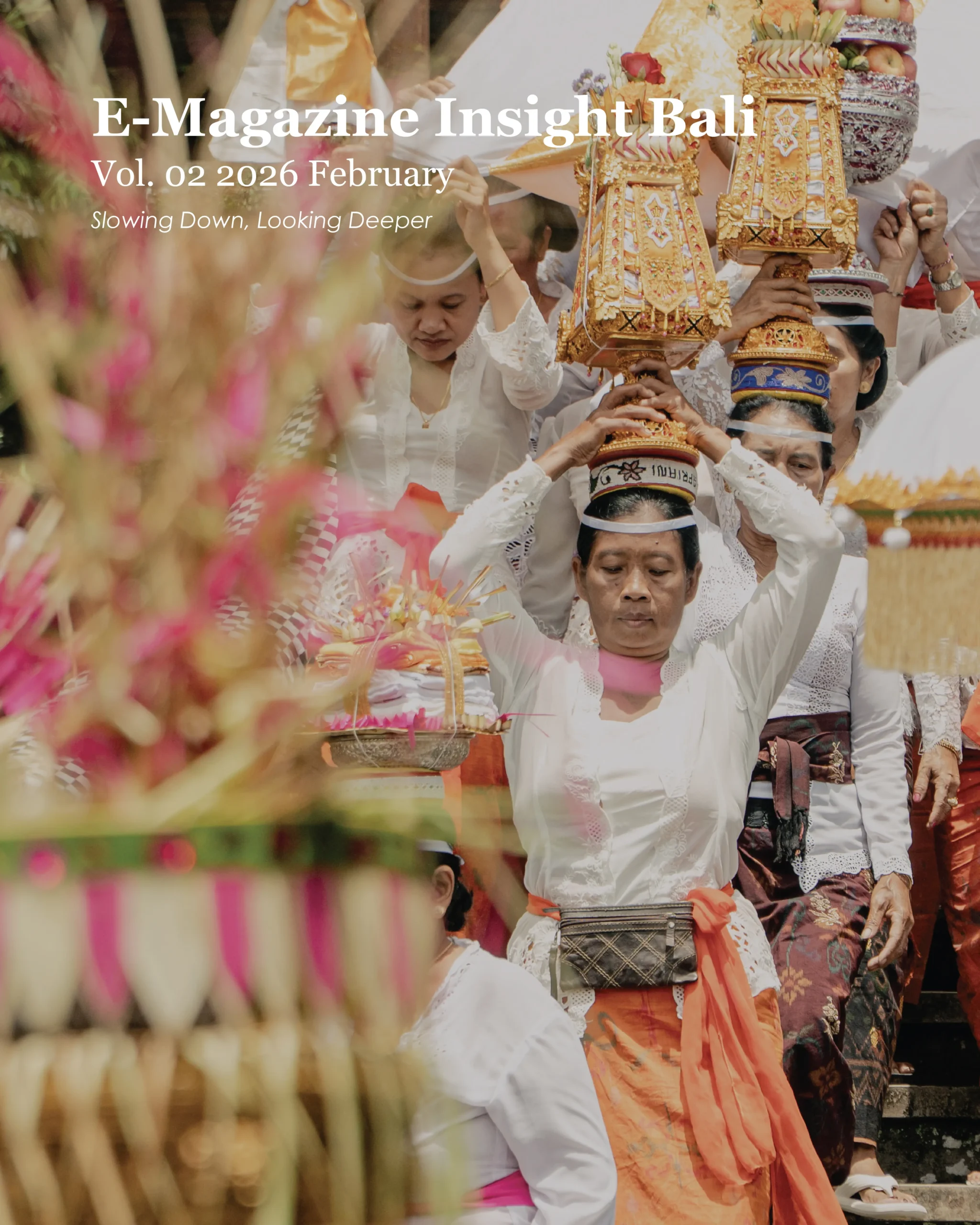
- Gebogan: A traditional offering arranged in several tiers using fruits, traditional snacks, and flowers. It is commonly prepared for religious ceremonies and carried to temples as part of an offering procession.
- Daksina: A type of banten that symbolizes Sang Hyang Widhi Wasa. Its materials and arrangement follow specific requirements depending on the religious ceremony being performed.
- Saiban (or Ngejot): A simple offering consisting of a small portion of cooked food, usually prepared before the family starts eating. This tradition represents gratitude for the food and blessings received.
How Visitors Should Respect Canang Sari in Bali
For tourists visiting Bali, understanding how to respect Canang Sari is an important way to appreciate local culture and religious beliefs. These offerings can often be found on sidewalks, in front of shops, at home entrances, and around temple grounds. Although they may look simple, Canang Sari hold important spiritual meaning for Balinese Hindus. Visitors should keep the following guidelines in mind:
- Do Not Step on or Over Canang Sari
Avoid stepping on or walking over Canang Sari placed on the ground. If you find them on a sidewalk or near a building entrance, walk around them whenever possible. - Do Not Move or Touch the Offerings
Avoid moving, taking, or touching any part of the offerings, including the flowers, incense, and money placed inside them. Leave them where they have been arranged. - Give Space to Those Making Offerings
If you see someone preparing or presenting Canang Sari during prayer, give them enough space and avoid interrupting the activity. Wait until they have finished before passing through the area. - Ask Permission Before Taking Photos
Visitors are welcome to photograph Balinese traditions, but it is best to ask permission before taking pictures of people who are praying or preparing offerings. Avoid moving or rearranging Canang Sari just to get a better photo. - Follow Local Customs at Temples
When visiting temples, dress modestly and wear a sarong and sash when required. Follow the instructions given by temple staff or caretakers, and avoid entering sacred areas that are restricted to visitors.
Respecting Canang Sari does not require complicated actions. By watching where you step, giving people space during religious activities, and leaving the offerings undisturbed, you can show respect for a tradition that remains an important part of daily life in Bali.
A Small Offering That Reveals a Deeper Side of Bali
Although small in appearance, Canang Sari carries deep spiritual meaning and reflects the gratitude, devotion, and cultural values of Balinese Hindu life. Understanding this daily tradition offers visitors a better appreciation of Bali beyond its landscapes and attractions. For more cultural insights, local traditions, and travel inspiration, follow Insight Bali, your guide to exploring the island and discovering more of what Bali has to offer.