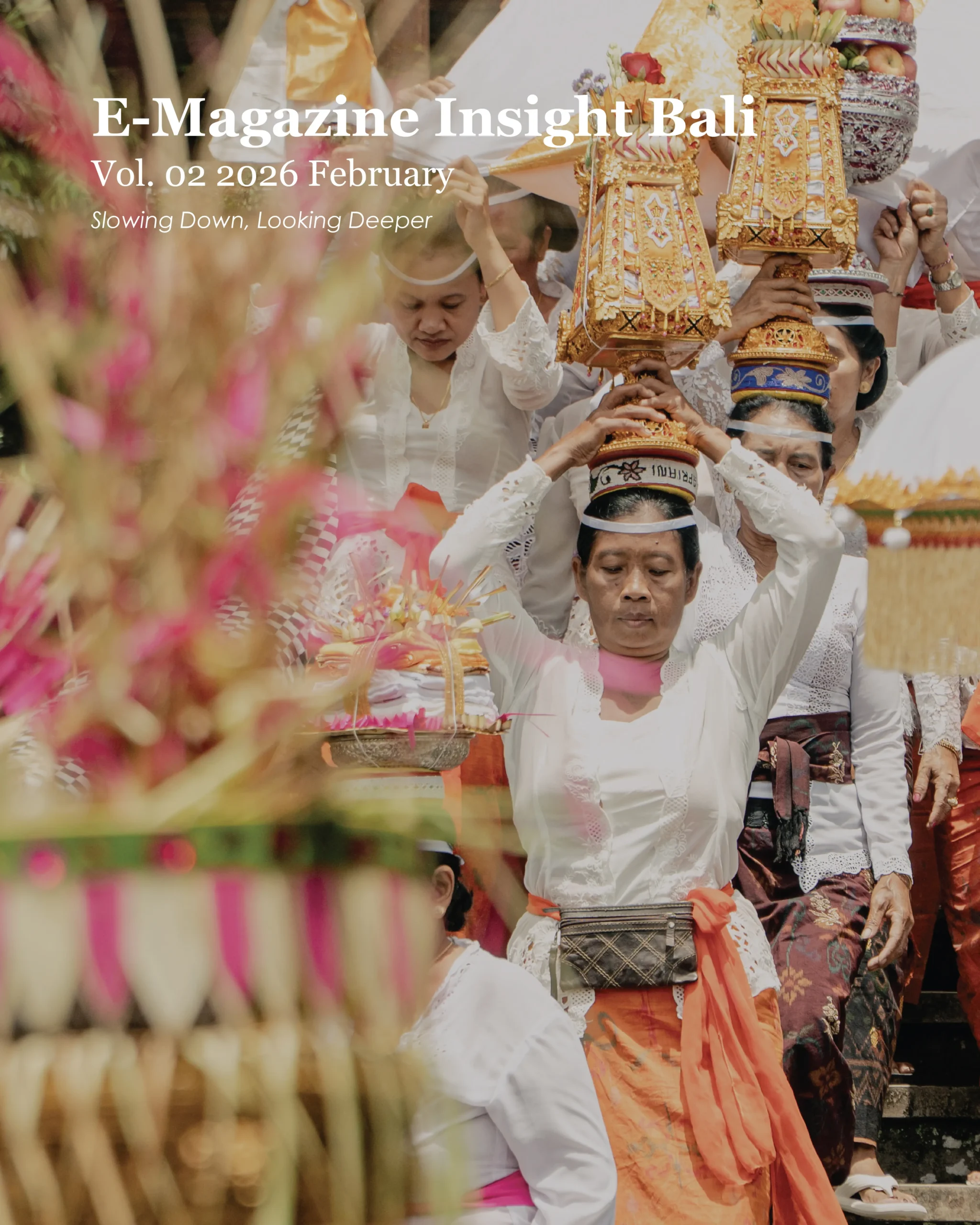
Bali’s famous temple sites are so important for Hindus, because they serve as sacred spaces for worship, rituals, spiritual connection, and community gatherings. These temples also reflect Bali’s harmony with nature, culture, and tradition.
This guide highlights the must-visit temples across the island, helping you explore Bali’s most iconic spiritual landmarks on your cultural journey.
What to Know Before Visiting Bali Temples
Visiting a Bali temple is a meaningful cultural experience, but it’s important to follow local customs to respect the sacred atmosphere. Here’s what to keep in mind before exploring temples in Bali:
- Wear Traditional Attire: Modest clothing is required, with sarongs and sashes worn by both men and women. Most large Balinese temple sites provide rentals at the entrance.
- Menstruation Restrictions: Women who are menstruating are not allowed to enter temple grounds, as this condition is considered ritually impure.
- Respect Ceremonies: Avoid walking in front of praying worshippers, keep a respectful distance when taking photos, and never stand higher than the priest or offerings.
- Restricted Areas: Inner sanctums are reserved for Hindu worshippers, while visitors can usually explore only the outer or middle courtyards.
- Avoid Ceremony Days: Major festival times like Odalan are very crowded, so it’s best to visit on regular days to fully appreciate the best temples in Bali peacefully.
Most Famous Temples in Bali You Should Visit
1. Tanah Lot Temple
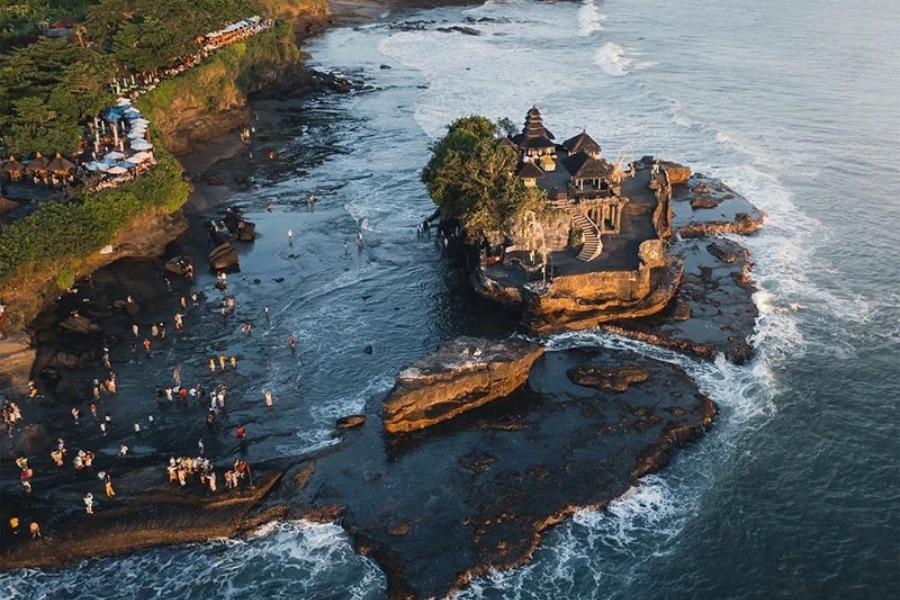
Located in Beraban Village, Tabanan, Tanah Lot is one of the most famous temples in Bali, set perfectly on a giant rock in the middle of the sea. As part of the island’s sacred sea temples, this Hindu temple is believed to guard Bali’s shores from negative forces.
During high tide, it looks as if it’s floating on the ocean, while low tide allows visitors to walk closer to the base of the temple rock. Its golden-hour panoramas make it one of the most iconic sunset spots on the island.
2. Uluwatu Temple (Pura Luhur Uluwatu)
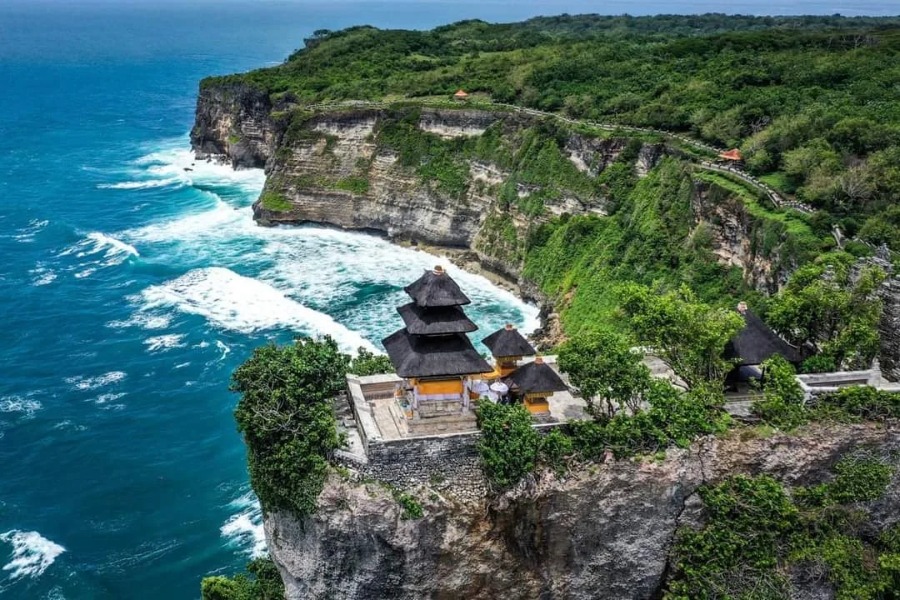
Standing 70 meters high on a cliff in Pecatu, this temple is another coastal guardian, dedicated to Dewa Baruna, the God of the Sea. Famous for its sweeping ocean views, Uluwatu also hosts the beloved Kecak and Fire Dance at sunset, drawing visitors from around the world.
The temple’s dramatic setting and playful resident monkeys make this Hindu temple a must-see cultural highlight in South Bali.
3. Besakih Temple (Mother Temple of Bali)
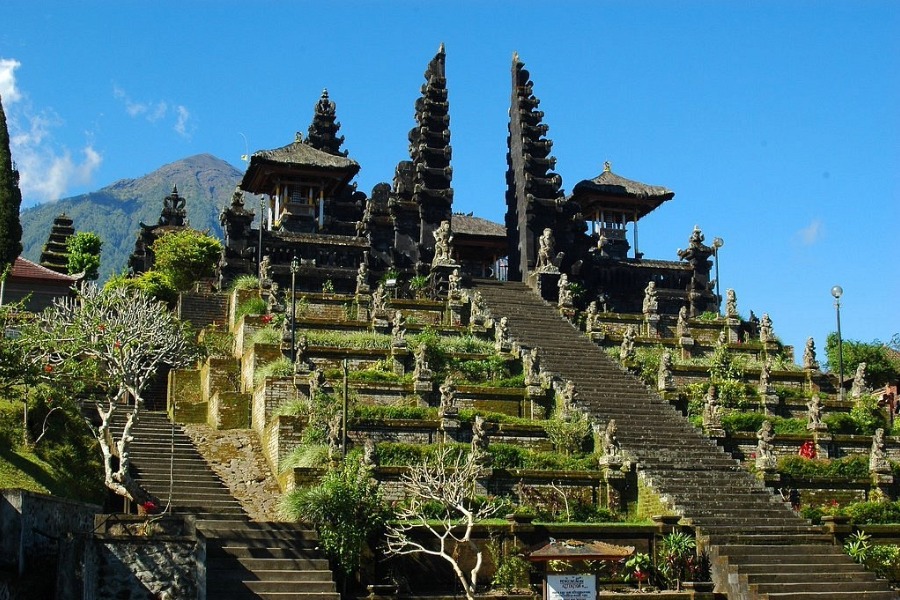
Standing on the slopes of Mount Agung, Besakih is the biggest temple in Bali, often referred to as the Mother Temple. This vast complex of over 80 shrines serves as the spiritual heart of Balinese Hinduism, honoring the divine through the Trimurti of Brahma, Vishnu, and Shiva.
Visitors come to admire its ancient architecture, grand ceremonies, and the majestic mountain backdrop, often exploring with the guidance of a local temple escort.
4. Tirta Empul Temple (Pura Tirta Empul)
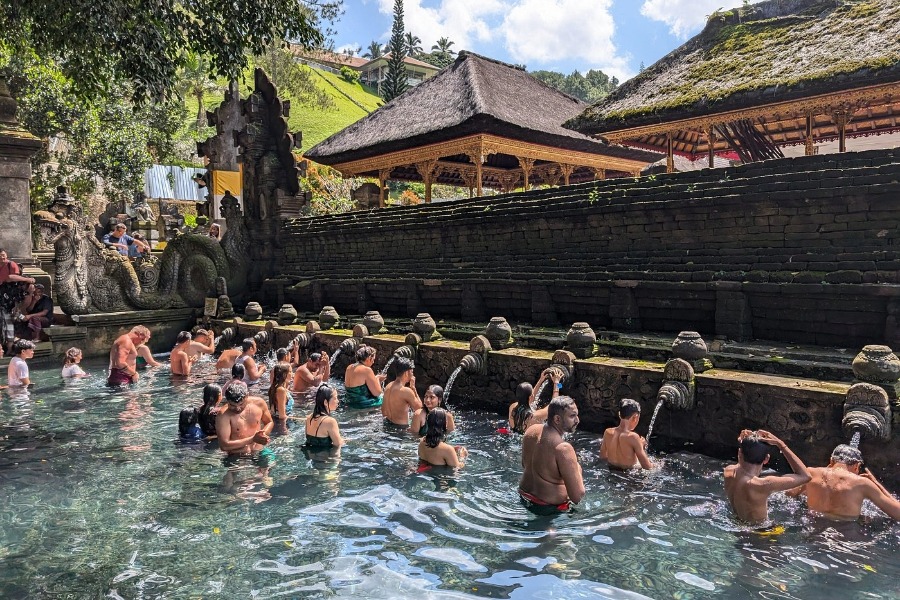
Located in Tampaksiring near Ubud, Tirta Empul is one of the best temples to visit in Bali, known for its sacred spring that continuously flows with fresh holy water. Dedicated to Vishnu, this temple is famous for the Melukat cleansing ritual, where visitors and worshippers bathe under the fountains for spiritual purification.
Guests may join the ritual with proper guidance and by wearing Balinese traditional clothes, making it a meaningful cultural experience. The complex also sits beside the historic Tampaksiring Presidential Palace built by President Sukarno.
5. Gunung Kawi Temple
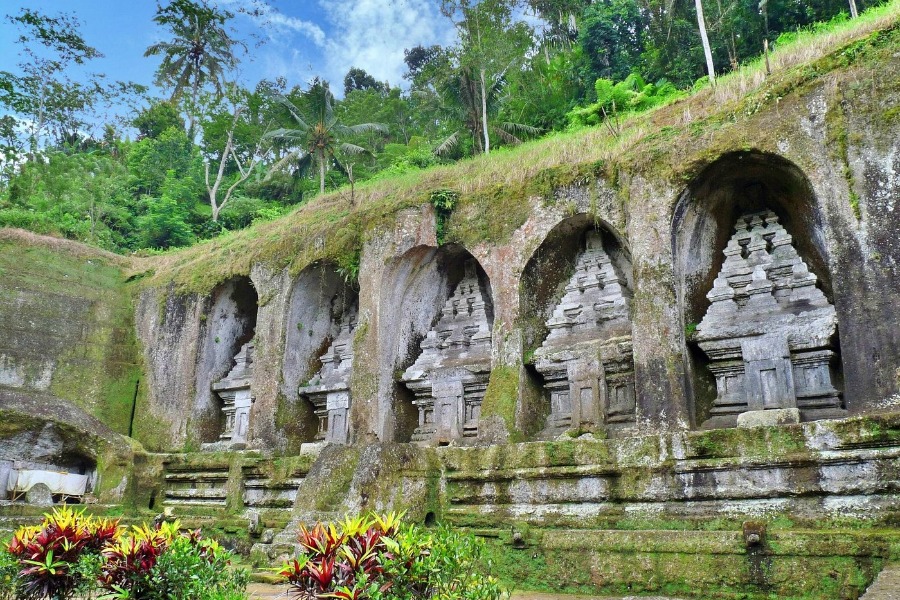
Also located in Tampaksiring, Gunung Kawi stands out with massive shrines carved into a limestone cliff along the Pakerisan River Valley. Often included among the top temples in Bali, this 11th-century archaeological site is believed to honor the kings of the Warmadewa Dynasty.
Reaching it requires descending a long stone staircase through lush rice terraces, offering a mini adventure that can be one of the top things to do with kids who enjoy exploring ancient sites. The serene setting and monumental cliff carvings make the visit unforgettable.
6. Lempuyang Temple (Pura Penataran Agung Lempuyang)
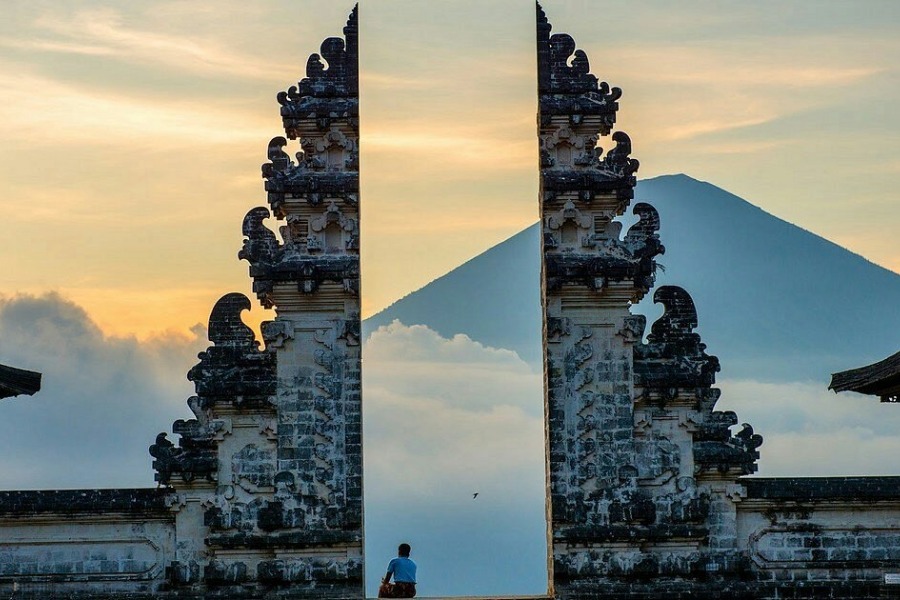
Now moved to the East, Mount Lempuyang’s slopes in East Bali, this temple complex is one of the island’s most sacred and consists of seven separate temple levels, just a glimpse of how many temples in Bali carry deep spiritual meaning.
Famous worldwide for its “Heaven’s Gate,” visitors come for the iconic photo frame of Mount Agung through the temple’s split gate. The climb is challenging but rewarding, and the mystical clouds hugging the mountain make the experience feel magical.
7. Ulun Danu Beratan Temple
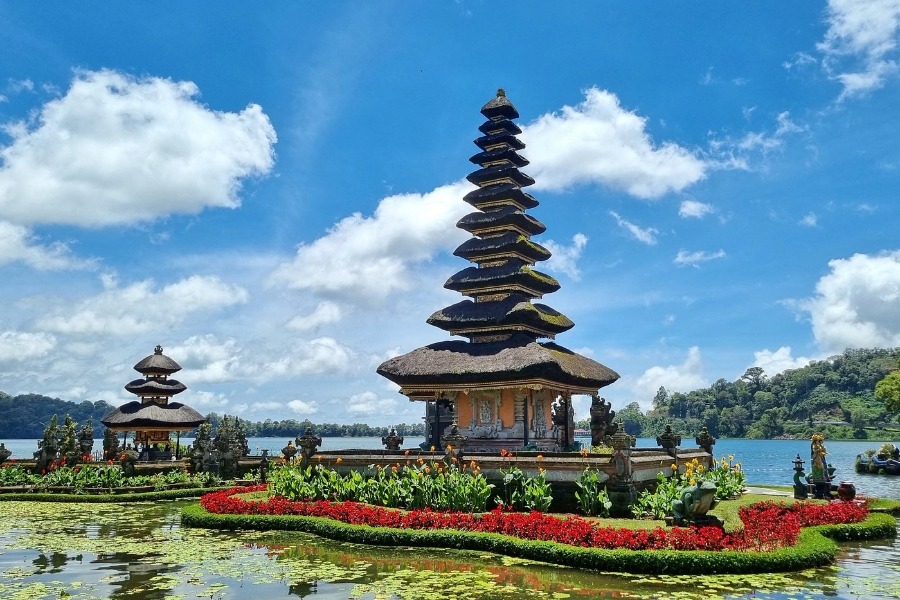
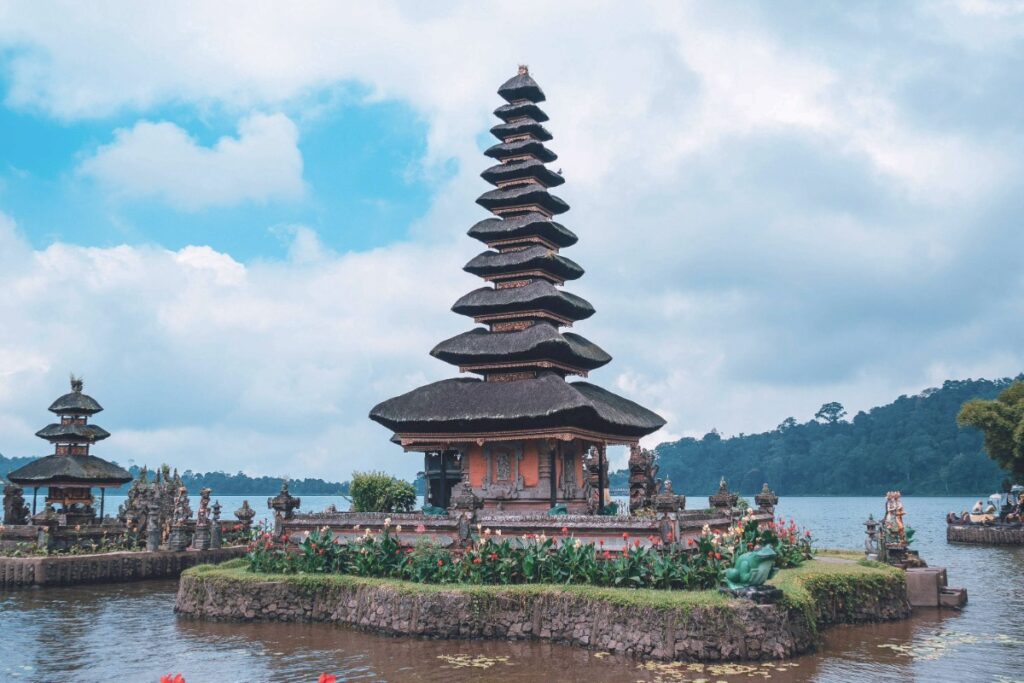
Set on the calm shores of Lake Beratan in Bedugul, this iconic spot is one of the most photographed temples in Bali on the water. Its tiered Meru shrines appear to float when the lake rises, honoring Dewi Danu, the goddess of water.
Beyond its beauty, the temple supports Bali’s subak irrigation system and symbolizes fertility for the island’s farmlands. Surrounded by cool mountain air and misty scenery, it’s a magical stop for anyone visiting temples in Bali.
8. Goa Gajah (Elephant Cave)
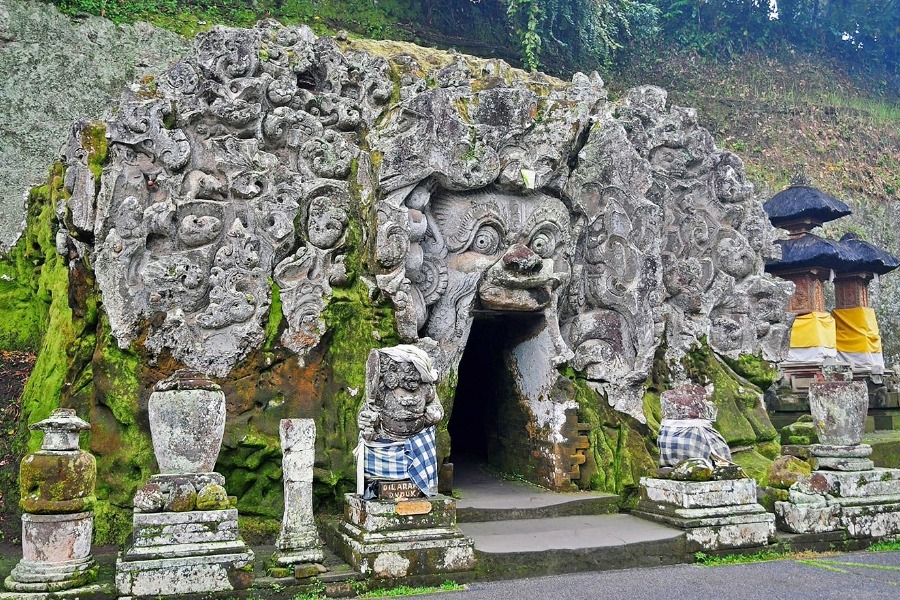
Located in Bedulu near Ubud, Goa Gajah is famous for its dramatic bali temple gate carved into the shape of a giant face. Inside, you’ll find ancient Hindu and Buddhist relics, reflecting a blend of spiritual traditions from the 9th century.
The site was once a meditation space for monks, adding a mystical feel to your walk through the cave. Nearby, a sacred bathing pool with apsara statues completes the historical charm.
9. Taman Ayun Temple
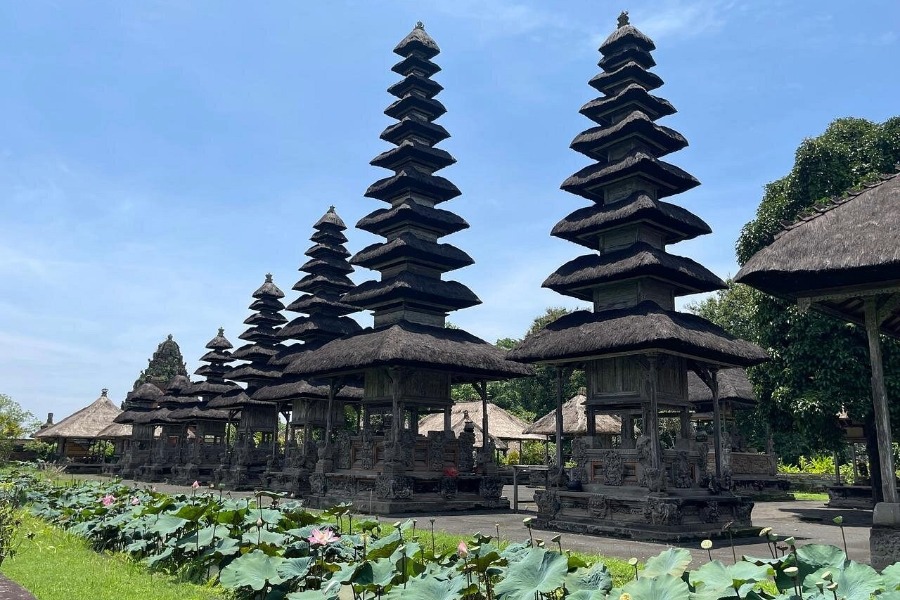
Found in Mengwi, this royal temple is surrounded by a wide moat that makes it look like a serene garden floating on water. Built in the 17th century, its elegant layout, tall Meru towers, and peaceful grounds make it one of Bali’s most graceful landmarks.
The grand temple gate and UNESCO-listed role in the subak irrigation system highlight its cultural importance. Visitors can explore the tranquil outer complex, while the inner sanctum remains reserved for prayer. This could be an alternative if you don’t have time to visit Beji Griya Waterfall Park.
10. Goa Giri Putri (Nusa Penida)
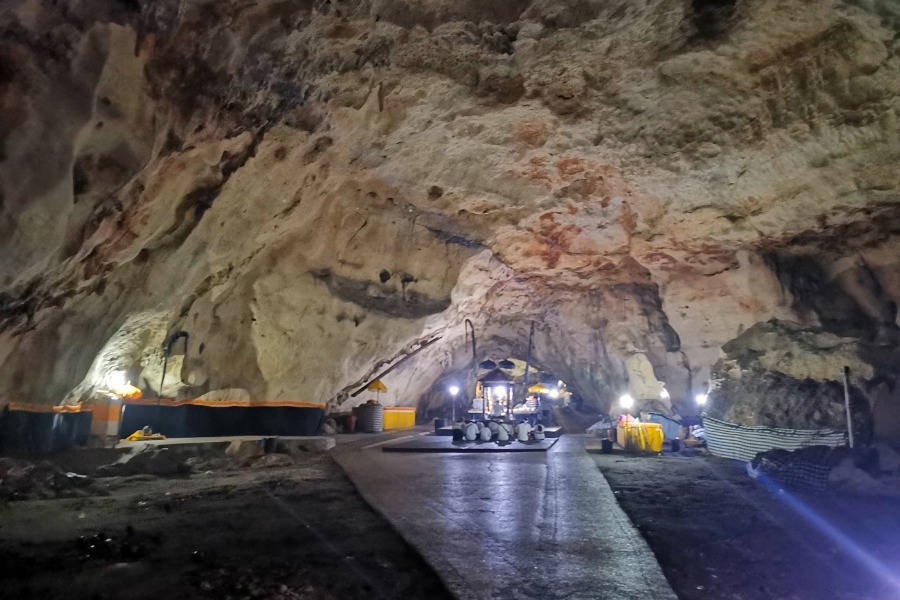
Hidden in Suana Village on the northeastern side of Nusa Penida, this remarkable site stands out as one of the most unique sacred temples in Bali. Entirely tucked inside a vast limestone cave, it can only be entered through a narrow crack in the cliff, giving visitors the feeling of stepping into another realm. Dedicated to Dewi Giri Putri, a manifestation of Parvati, the temple is a powerful destination for Tirta Yatra pilgrims seeking purification and blessings.
Inside, the cave opens into a massive chamber with six different prayer areas, each used for rituals and the collection of holy water. The atmosphere is serene and deeply spiritual, drawing worshippers from Bali, Java, and Lombok. Many visitors join the rituals or simply observe the devotion, making this one of the island’s most unforgettable sacred experiences.
Tips for Visiting Temples in Bali
- Bring Your Own Sarong and Shawl
Carrying your own modest attire makes visiting any Bali famous temple smoother and more comfortable. You’ll avoid rental fees and enter more quickly while staying respectful of local customs. - Plan the Perfect Time for Coastal Temples
Sunset is the most stunning moment to enjoy sea temples like Tanah Lot or Uluwatu. For Tanah Lot, check the low tide schedule if you want to walk closer to the main shrine. - Keep Small Cash Handy
Most temples request a small donation or entry fee, so carrying cash is practical. At sites like Besakih or Gunung Kawi, local guides may offer their services—feel free to decline politely if you prefer exploring on your own.
Best Time to Visit Temples in Bali
- Morning (Before 9:00 AM) – Best for Comfort & Photos
Exploring a Bali temple early in the day gives you cooler weather, soft lighting, and fewer visitors. Perfect for peaceful walks and capturing beautiful shots of temple gates and sacred courtyards. - Afternoon (After 3:00 PM) – Golden Hour Views
Many temples in Bali shine during sunset, especially Tanah Lot and Uluwatu. The sky turns warm and dramatic, creating unforgettable scenery. - During Ceremonies – Cultural & Spiritual Experience
Visiting during a ritual allows you to witness Balinese traditions up close. Just respect the rules, dress modestly, and avoid disturbing the worship. This is one of the most meaningful ways to enjoy the best temples in Bali. - Dry Season (April–October) – Clear Skies & Ideal Conditions
Sunny weather makes temple exploration easy and photos vibrant. Expect more crowds due to peak season. - Rainy Season (November–March) – Quiet & Peaceful
Fewer tourists and a calm atmosphere make temple visits more serene, though occasional rain is expected.
Exploring Bali famous temple sites offers a deeper connection to the island’s rich spirituality, breathtaking landscapes, and timeless cultural heritage. For more inspiration and the best insights into planning your journey across Bali’s sacred landmarks, rely on Insight Bali as your trusted guide.