Balinese food isn’t just delicious — it’s cultural, ceremonial, and full of character.
Most dishes start with base genep, a spice paste that lays down those deep, earthy flavours. Add smoke from the grill, coconut, and meats cooked low and slow — and suddenly lunch feels like something bigger.
If you’re hungry and curious, here’s how to eat like the people who call the island home.
Table of Contents
ToggleUbud Food Tours: Rice Fields and Traditional Flavors
Exploring food in Ubud feels deeply connected to nature and tradition. Surrounded by rice fields and village life, Ubud is the perfect place to experience traditional Balinese food in its most authentic form, often enjoyed in calm, scenic settings. Many travelers even choose a private food tour Bali here to fully understand the stories behind each dish.
Babi Guling Ibu Oka
This is one of the most iconic dishes in Balinese cuisine. The whole pig is roasted with base genep, resulting in crispy skin and rich, flavorful meat that locals and visitors line up for.
Ayam Betutu
Slow-cooked chicken wrapped in banana leaves and infused with spices until incredibly tender. The long cooking process allows the spices to soak deep into the meat, making it a true highlight of local food Bali.
Bebek Bengil (Crispy Duck)
Ubud is famous for its duck dishes, and crispy duck is a must-try. Fried until golden and crunchy on the outside while staying juicy inside, it’s usually served with rice, sambal, and fresh vegetables.
Denpasar Food Tour: Night Markets and Street Food Adventures
If you want to taste the everyday flavors locals love, Denpasar is the place to go. The city comes alive at night with bustling stalls and food vendors, making the Bali night market scene a must for food lovers for
Nasi Jinggo
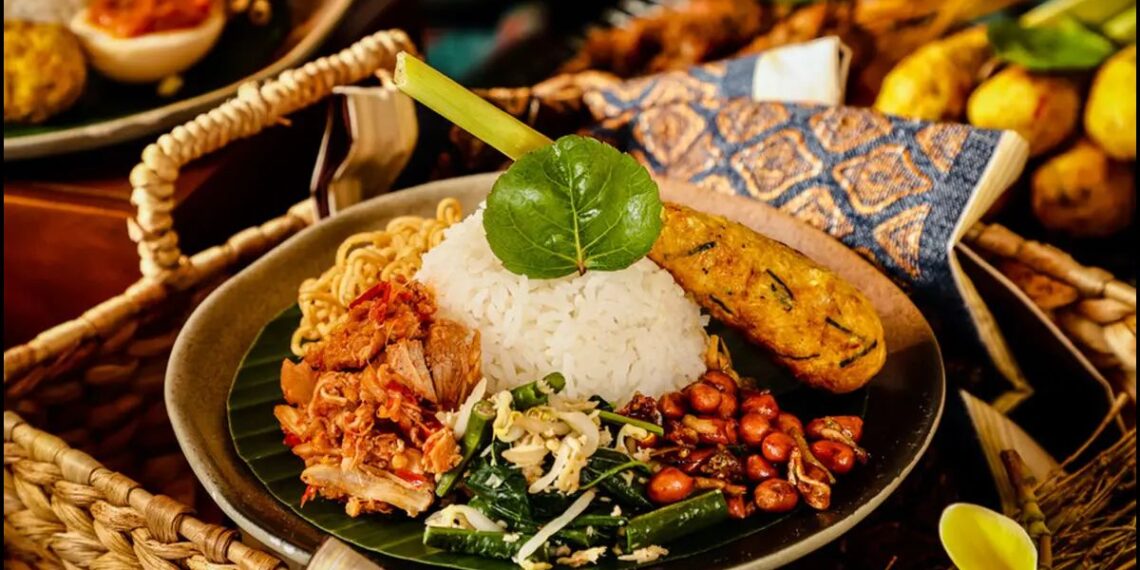
Often called Bali’s version of “street rice,” this small banana-leaf-wrapped meal includes rice, shredded chicken, noodles, tempeh, and spicy sambal. It’s a favorite late-night snack among locals and can be the best street food in Bali.
Sate Lilit
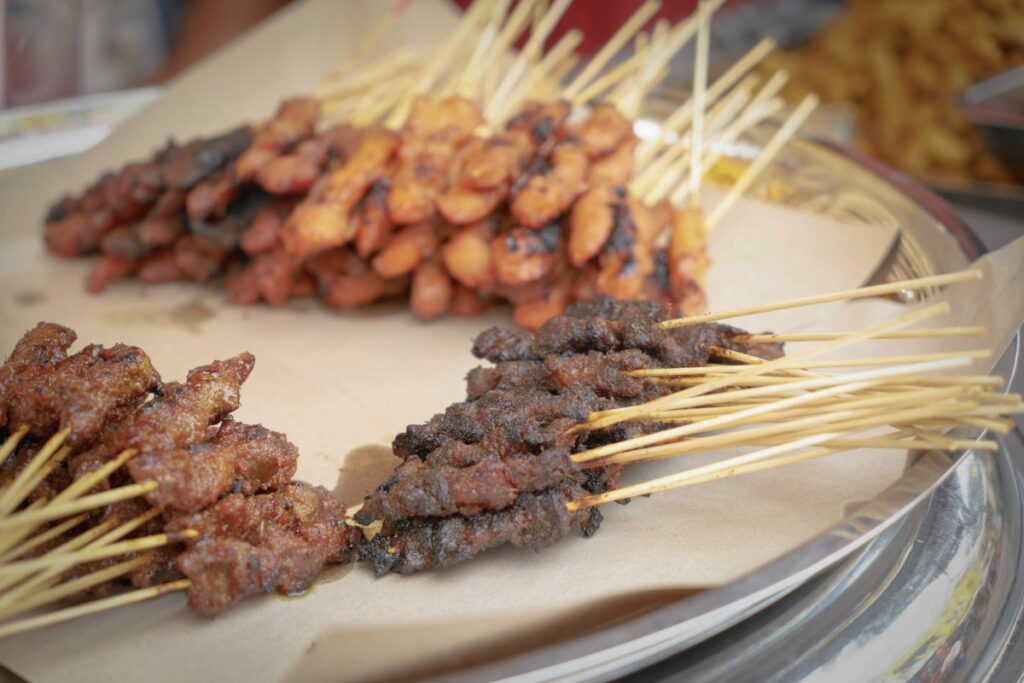
Unlike regular satay, this version uses minced fish or chicken mixed with coconut and spices, then wrapped around lemongrass sticks. The result is savory, aromatic, and uniquely Balinese.
Tipat Cantok
A comforting dish made from rice cakes and boiled vegetables mixed with freshly ground peanut sauce. Simple, filling, and customizable in spice level, it’s a classic example of local food Bali you’ll often find at street stalls.
Sanur Food Tour: Coastal Classics and Local Favorites
Sanur is perfect for travelers who want a calmer, more traditional dining experience. Along this coast, time-honored recipes continue to thrive beside relaxed beachfront eateries, making it a must-stop in any Bali food guide or Bali bites food tour focused on authentic flavors.
Mak Beng Fish Head Soup
A true legend of authentic Bali food, Mak Beng has been serving the same iconic menu since 1941. Expect crispy fried fish, a comforting yellow-spiced fish head soup, and a fiery shrimp paste sambal that locals swear by.
Men Weti Mixed Rice
Located near Segara Ayu Beach, this humble spot serves classic Balinese mixed rice with crowd favorites like crispy chicken skin, savory sate lilit, and fresh urap vegetables. It’s a staple for anyone exploring Bali’s traditional flavors beyond a typical Denpasar food tour.
Sanur Lumpia
As you walk along the beach, you’ll spot vendors selling fresh spring rolls served with thick tauco sauce, chili, and garlic. Simple, flavorful, and satisfying, this snack is a highlight of any Bali street food tour.
How to Choose the Right Food Tour for You
- Choose the Right Area and Vibe
Every part of Bali has its own food personality, so start by deciding what kind of experience you want. Ubud is perfect if you love green landscapes and rich, traditional flavors.
Denpasar is ideal for tasting real local life through night markets and affordable street food, while Canggu and Seminyak suit travelers who enjoy modern dining, healthy options, and creative fusion cuisine. - Think About Your Dietary Needs
Bali is generally very friendly to different diets, but it’s still important to check before booking. Ubud and Canggu are especially great for vegetarian and vegan food. Balinese dishes can be spicy, so if you’re sensitive to heat, look for tours that let you adjust the spice level or balance it with milder dishes. - Check Tour Length and Transportation
Food tours often take place in busy areas or night markets, which makes the experience more lively and immersive. If the stops are spread out, having transportation included is a big plus. Many tours use motorcycles to help you move quickly through traffic and reach more food spots in less time. - Read Reviews About Cleanliness and Safety
Food hygiene matters, especially for first-time visitors. Before booking, read reviews to see how other travelers rate cleanliness and food safety. A good food tour guide will know exactly where to take you for authentic flavors that are also safe and comfortable for your stomach.
Practical Tips Before Joining a Bali Food Tour
- Carry Cash (Rupiah)
Most street food stalls and night market vendors don’t accept cards or international e-wallets, so having cash on hand will make things much easier.
- Be Open About Food Allergies
If you have any allergies, let your guide know from the start. Whether it’s nuts, seafood, or gluten, being clear helps ensure a safe and enjoyable experience. - Check the Spice Level First
Balinese food can be very spicy. Before taking a bite, don’t hesitate to ask how spicy the dish is and request a milder version if needed.
A Bali food tour is one of the best ways to experience the island beyond its beaches, taking you straight into the heart of local flavors, night markets, and time-honored recipes built around rich spices like base genep.
From traditional dishes in Ubud, lively street food in Denpasar, and coastal favorites in Sanur to modern bites around Bali, exploring the island through food lets you eat the way locals do while learning the stories behind every dish. For the most trusted recommendations and curated culinary insights, follow Insight Bali as your go-to guide to exploring Bali like a local.